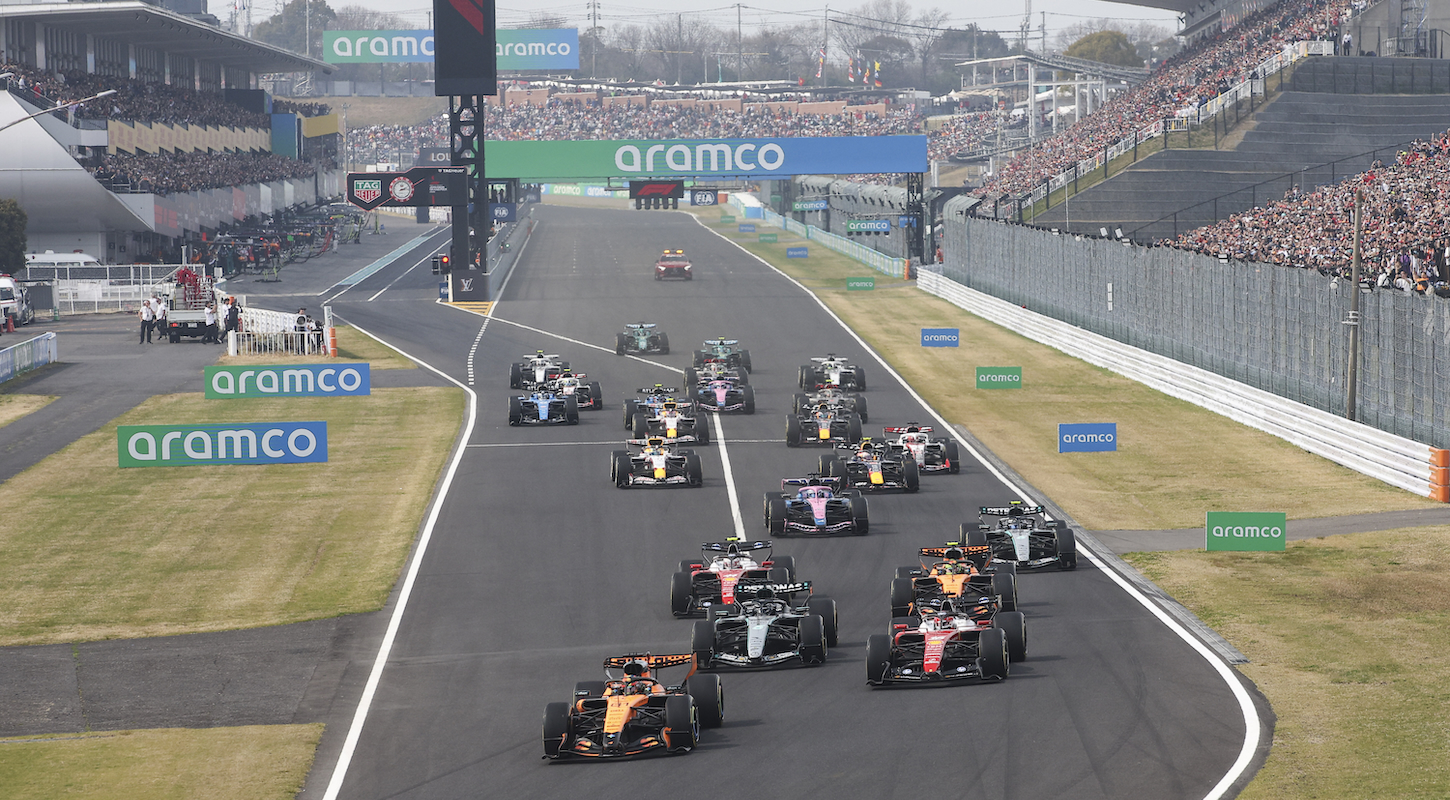
With Formula 1 idle throughout April, the FIA and key stakeholders have used the break to push through midseason changes to the widely criticized 2026 regulations. The revisions were published Monday, April 20, and—barring one exception—will apply immediately at the Miami Grand Prix on the weekend of May 3. The updates focus on three areas: curbing superclipping in qualifying, addressing safety concerns around energy deployment, and refining race-start procedures.
Dissatisfaction with the 2026 framework has been loud, though not unanimous. Some drivers have said they are enjoying the racing, with Ferrari’s pairing among those expressing positives; Charles Leclerc indicated as much over team radio. Still, the prevailing mood across the grid is that the rule set needs adjustments.
Most of the underlying issues trace back to the power unit, not the aerodynamic regulations, which have been broadly viewed as successful. The 2026 overhaul retained a hybrid format but significantly altered the balance between combustion and electric power.
Since 2014, F1 has used a V6 internal combustion engine (ICE) paired with a Motor Generator Unit–Kinetic (MGU-K). Under the pre-2026 rules, roughly 85 percent of total power came from the ICE and 15 percent from the MGU-K. For 2026, overall peak output remains 750 kW, but the split is now far closer to half-and-half: 400 kW from the ICE and 350 kW from the MGU-K. Crucially, when a car runs out of electrical energy, it can be left operating at around 50 percent of its maximum capacity rather than the previous 85 percent.
The energy accounting has also shifted. The per-lap allowance to regenerate and deploy electrical energy has risen to 8.5 MJ (a figure that can vary by circuit and session) from 4 MJ, while battery capacity remains 4 MJ. That combination forces cars into near-constant cycles of regeneration and deployment across a lap. At a full 350 kW draw, the MGU-K would consume 8.5 MJ in roughly 24 seconds—far less than a typical lap time—shaping how drivers and teams must manage energy.
This dynamic is especially disruptive in qualifying, where the FIA’s headline goal is to reduce time spent superclipping. Teams can charge the battery in two ways: harvesting under braking as the MGU-K converts kinetic energy to electrical energy, and on straights by diverting a portion of engine output to the MGU-K—even at full throttle—to top up the battery. That latter practice, known as superclipping, can deliver marginally quicker lap times overall, but it runs counter to the traditional flat-out, late-braking ethos that defines a qualifying push. The new tweaks are designed to limit that behavior and restore a more intuitive, transparent qualifying spectacle.
Races have not been immune. The mix of aggressive harvesting and deployment has produced sequences of overtakes and immediate re-overtakes that some drivers liken to yo-yoing. Several have also argued that software logic, rather than driver input, too often dictates when and how energy is deployed. The FIA’s adjustments aim to make energy delivery more predictable and address safety considerations around deployment patterns.

Don’t expect a wholesale reset midseason. Any fundamental change to how the hybrid power unit functions would be complex and is not feasible in the middle of a campaign. For now, the levers available are numerical—caps, limits, and thresholds—which, while technical, can meaningfully influence how the cars behave and how sessions unfold.
What happens next will be measured in Miami. Watch for whether qualifying features less superclipping and more conventional push laps, whether race starts feel cleaner under the refined procedures, and whether energy management appears less software-led. Longer-term architectural changes, if pursued, would have to wait until next year.
---
*Originally published on [Formula One News](https://newsformula.one/article/inside-f1-s-midseason-2026-rule-tweaks-and-what-they-mean). Visit for full coverage.*