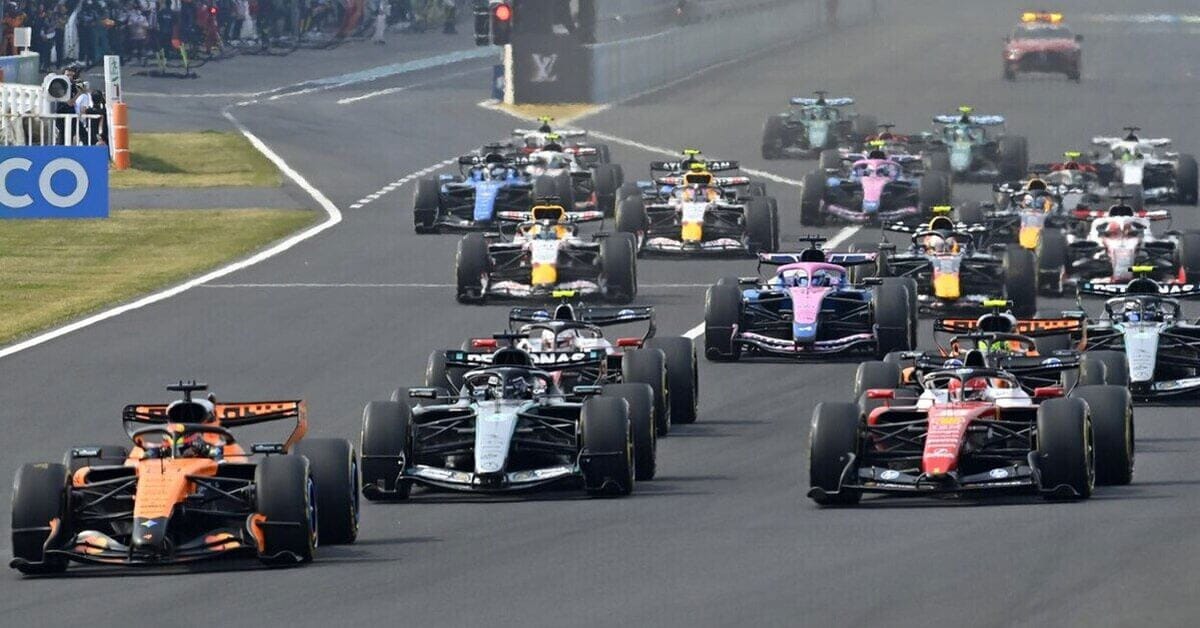
The FIA and Formula 1 teams are set to convene on May 8 to examine the first on-track effects of early 2026 regulation updates introduced around the Miami Grand Prix, according to RacingNews365. With initial race data now in hand, the governing body wants a deeper evaluation before the rule set is considered settled.
The review will center on whether revised energy management rules and qualifying parameters are producing the intended competitive balance. While teams were afforded roughly a one-month development window prior to Miami to adapt their tools and procedures, the FIA maintains that more analysis is needed to confirm the changes are working consistently across scenarios.
Key items under scrutiny include a reduction in recoverable energy during qualifying from 8 MJ to 7 MJ and a decrease in race “boost” deployment. At the same time, the “super clipping” power threshold was raised from 250 kW to 350 kW, a move aimed at smoothing power delivery and minimizing unpredictable energy drops that can unsettle car performance.
Safety-focused updates are also part of the package being assessed. Notably, a “low-power acceleration detection” mechanism now monitors launches and automatically activates the MGU-K if a car shows insufficient acceleration after clutch release at the start. The intent is to guarantee a minimum safety standard and prevent irregular launch behavior on the grid.
Early indications from Miami suggest incremental progress, particularly in overall race flow and energy deployment. The opening sample size remains small, but the initial readout has given the FIA and teams clearer reference points for how the new parameters behave under race conditions.
Feedback from within the paddock has been cautiously positive. Several teams felt that the racing product in Miami was more natural than earlier simulations of the 2026 concept implied, and drivers indicated energy management—while still intricate—was a touch more predictable. Even so, engineers continue to highlight tight margins, especially in qualifying, where small variations in deployment can notably influence lap-time consistency.
No sweeping changes are currently expected to emerge directly from the May 8 meeting, though officials are keeping options open as more data becomes available. The overarching objective remains a stable equilibrium between performance, efficiency and spectacle, with a rules platform that is robust enough to handle varying circuit demands.

Regulatory evolution in Formula 1 is rarely linear, and further refinements later in the season have not been ruled out if performance disparities or operational issues become clearer across different tracks and conditions. For now, the direction is one of cautious optimization rather than wholesale overhaul. What to watch next: conclusions from the May 8 review and any subsequent adjustments as teams and the FIA continue to iterate toward the final shape of the 2026 era.
---