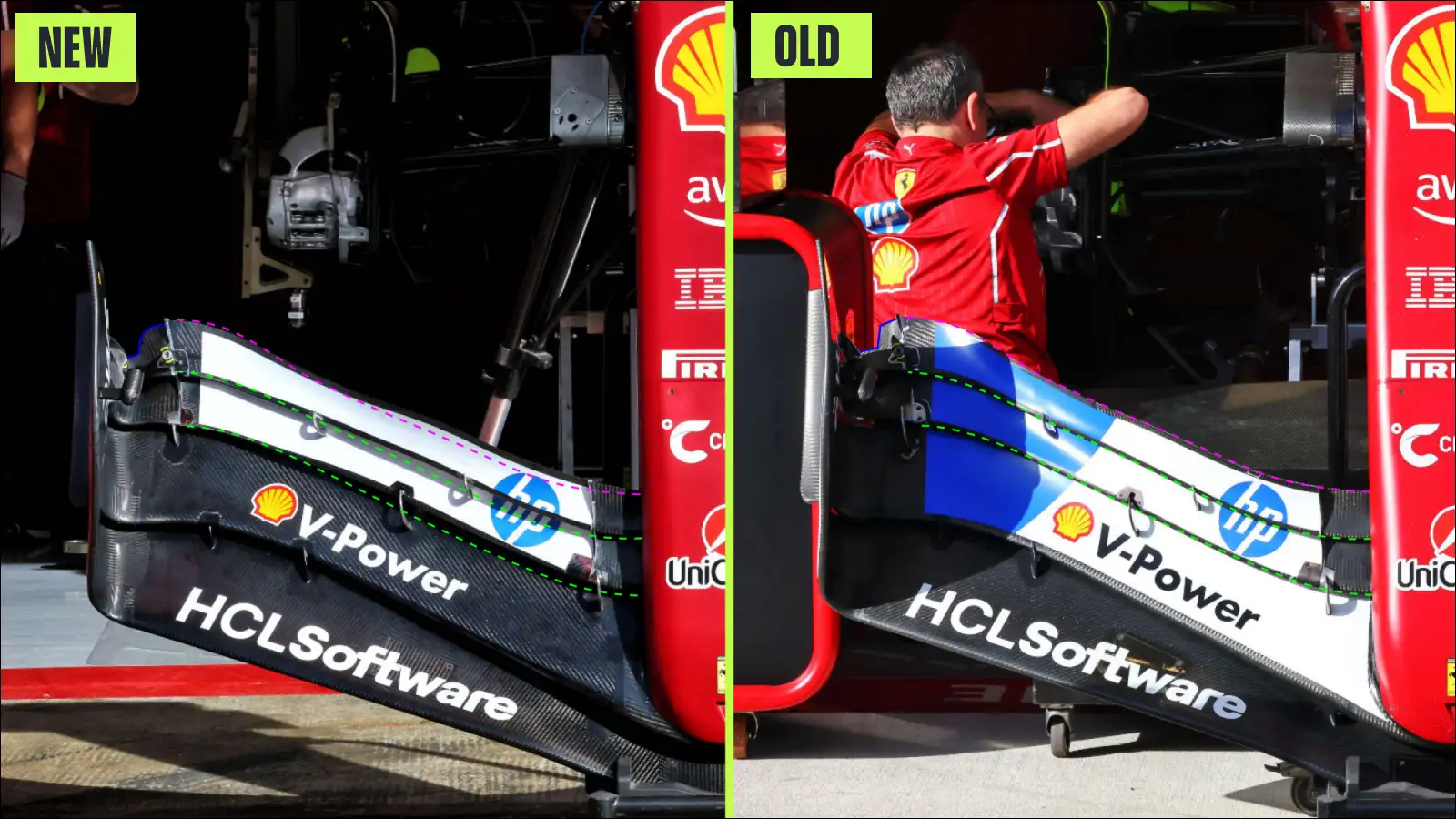
As Formula 1 gears up for the upcoming Spanish Grand Prix, teams are adapting to more rigorous front wing load and deflection tests imposed by the FIA. Ferrari, in particular, has made substantial changes to their SF-25 front wing to meet these new regulations, while also refining other design elements during the process.
The essence of Ferrari's wing design philosophy remains intact, but the modifications are clearly aimed at enhancing performance. The most significant changes have been implemented in the outboard section of the wing, likely to improve outwash performance and overall aerodynamics. "We’re always looking to extract more performance and we believe these changes can help us in that regard," said a representative from Ferrari’s engineering team.
"We’re always looking to extract more performance and we believe these changes can help us in that regard,"
Last season, Ferrari debuted a more flexible front wing setup at the United States Grand Prix, an initiative aimed at capturing some of the performance benefits seen in rival designs. This initial change, however, didn’t alter the architecture of the wing significantly and went unlisted in the car presentation document. The evolution culminated in the design of the SF-25, with further adjustments being made as the season progressed.
Career Journey

Career Journey
Career Journey
The fresh changes seen at the Spanish Grand Prix involve subtle geometrical adjustments, particularly in the main flap section of the wing, focusing primarily on the two upper flaps. The engineering team compared the new wing to its predecessor used in Miami, finding discernible differences in both the leading and trailing edge geometry. "When we analyze the data, the results clearly show that we’ve improved the aerodynamic characteristics of the wing, which is crucial for our performance on track," stated a senior engineer.
"When we analyze the data, the results clearly show that we’ve improved the aerodynamic characteristics of the wing, which is crucial for our performance on track,"

Career Journey
These new modifications align perfectly with the updated point load test requirements, which now restricts the wing's movement to just 3mm when a 60KG/60N load is applied, down from the previous 5mm allowance. This tightening of parameters necessitates a reconsideration of how designers approach the load distribution in front wing elements. "These changes will force us to think differently about our setup in all types of corners," noted Ferrari's chief designer.
"These changes will force us to think differently about our setup in all types of corners,"
Team Dynamics
In addition to the changes in downforce-generating components, the team has made several significant alterations to the outboard segment of the wing to ensure that outwash is balanced and effective. This includes revising the intersection geometry where the flapped section meets the endplate, transitioning from a flat trailing edge to a more aerodynamically effective curved design.
Team Dynamics
Moreover, Ferrari has raised the height of the lower rear corner cutout, revealing a new vane structure added inboard. This approach replaces the previously inwardly curved flap tip and echoes design strategies seen in other top teams, such as Mercedes. "Incorporating successful elements from other teams while maintaining our own identity is key to our design philosophy, and we believe this latest wing reflects that," emphasized the lead aerodynamicist.
"Incorporating successful elements from other teams while maintaining our own identity is key to our design philosophy, and we believe this latest wing reflects that,"
As Ferrari prepares for the Spanish Grand Prix, the changes to the SF-25 front wing offer a promising shift in their competitive edge. The adjustments signify the team's commitment to evolving in response to regulations and rival strategies, focusing on optimizing performance amid new challenges. With the first on-track tests of the updated wing fast approaching, all eyes will be on Ferrari to see if their innovations pay off in the quest for championship glory.