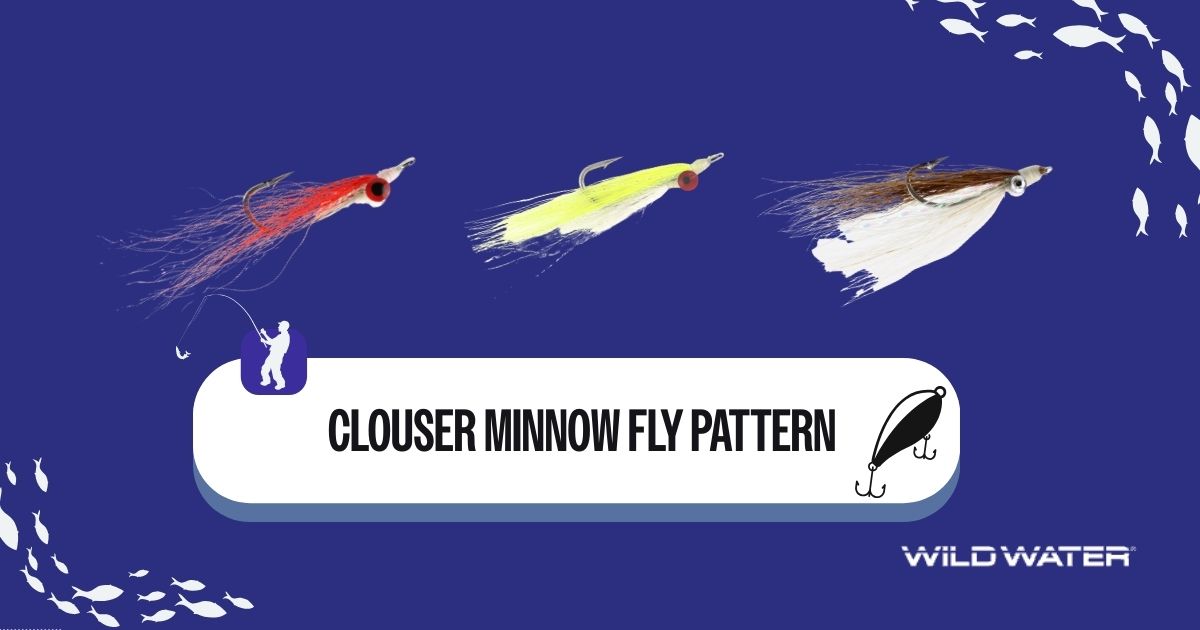
A Pennsylvania fly fishing guide's simple solution to a stubborn smallmouth bass problem has become one of the most versatile and effective fly patterns in angling history.
Bob Clouser created the Clouser Minnow in 1987 when smallmouth bass on the Susquehanna River were holding deep along rocky structure. His innovation was deceptively simple yet revolutionary: placing weighted dumbbell eyes on top of the hook shank rather than below it.
This placement causes the fly to ride hook-point up, allowing it to crawl through rocks, timber, and river bottoms with minimal snagging. The weighted design sinks at roughly one foot per second in still water, getting the fly into the strike zone quickly.

The Clouser Minnow's effectiveness stems from its jigging action that mimics wounded baitfish. When stripped, it darts forward; when paused, it drops. This erratic movement triggers predatory instincts in gamefish.
"The weight sits on top, so the Clouser Minnow flips upside down in the water and rides with the hook point facing up," according to Wild Water Fly Fishing. "That means fewer snags on rocks, timber, and structure."
"The weight sits on top, so the Clouser Minnow flips upside down in the water and rides with the hook point facing up,"
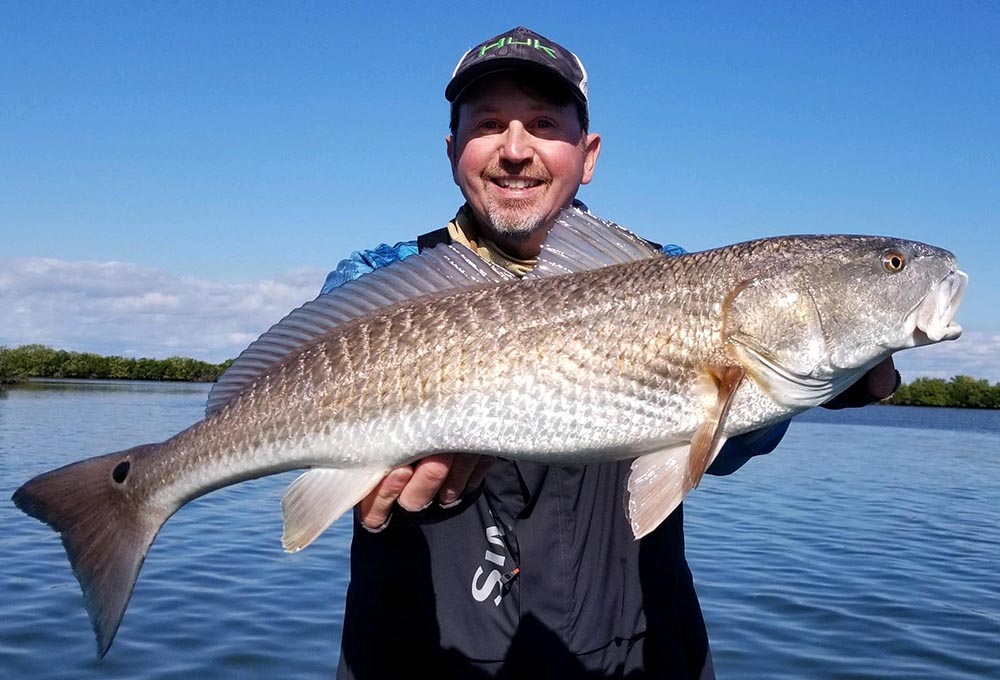
The pattern imitates various baitfish depending on location and conditions. It can represent shad, minnows, sculpins, shiners, threadfin shad, glass minnows, or virtually any small prey fish near bottom structure.
The Clouser Minnow's versatility is remarkable, successfully targeting over 80 freshwater and saltwater species. Freshwater targets include smallmouth and largemouth bass, rainbow, brown, and brook trout, pike, panfish, and even carp.
Saltwater applications extend to redfish, striped bass, bonefish, and numerous other coastal species. This cross-environment effectiveness makes it an essential pattern for any streamer collection.
Color selection varies by species and conditions, with chartreuse and white combinations proving consistently effective across multiple species. Black and white patterns also rank among top producers, particularly for bass and trout.
Fishing techniques vary by environment. In rivers and streams, anglers work current seams and deeper pools. Lake fishing involves counting down to reach specific depth zones before beginning retrieval.
Saltwater applications include working flats for bonefish and redfish, with pattern size and color matched to local baitfish populations.
The Clouser Minnow succeeds because it solves fundamental fishing challenges: reaching fish holding near bottom structure while minimizing snags, all while presenting an irresistible wounded baitfish profile.
Career Journey
Career Journey
Career Journey
Nearly four decades after its creation, the Clouser Minnow remains a go-to pattern for guides and anglers worldwide, proving that simple, functional design often trumps complexity in fly fishing.